

LinkedIn Event Marketing: Do Event Pages or Attendee Posts Drive More B2B Registrations?
You spent months securing top-tier keynote speakers, building a conversion-optimized landing page, and pouring budget into paid ads. Yet, registration numbers remain stagnant. When B2B event organizers plan their digital promotion tactics, one debate constantly pops up in team meetings: Should you focus your energy on setting up dedicated native landing pages, or should you turn your registered attendees into personal promoters? Mastering effective linkedin event marketing requires understanding how these two distinct channels function together and where your audience actually places their trust.
The short answer is straightforward. You should not treat this as an either-or choice. Both tools serve different parts of your event distribution strategy. However, if your primary goal is driving highly qualified registrations from peer networks, attendee-generated posts outperform official event pages by a massive margin. People buy from people, not logo accounts. Let us examine how both channels operate, why individual posts generate higher-intent signups, and how you can tap into word-of-mouth promotion for your next conference.
The Structural Role of Native LinkedIn Event Pages
Native event pages on professional networks serve a clear operational function in linkedin event marketing. Think of an event page as a central informational bulletin board on the platform. When users land on your event page, they find the date, time, agenda, speaker list, and registration link in one clean interface. It provides an immediate sense of legitimacy to your conference.
LinkedIn Event pages also offer native technical capabilities that streamline early operations:
Direct calendar synchronization for confirmed attendees
Built-in push notifications sent by the platform when you host live streams or post major updates
A centralized participant directory where registered guests can network before the physical event opens
Simple integration with native lead gen forms to collect email addresses without external redirects
Despite these administrative advantages, native event pages face severe organic reach limitations. Social algorithms prioritize personal human interaction over corporate brand pages. When an official page posts an event update, the platform distributes that content to a tiny fraction of your total followers unless you boost it with paid advertising. An event page gives your conference structure, but it rarely generates viral organic discovery on its own.
Why Individual Attendee Posts Drive Qualified Registrations
When an executive scrolls through their feed, they naturally tune out generic corporate promotional graphics. What catches their attention instead is a peer, former colleague, or industry leader sharing a post that says, "I just grabbed my ticket for this conference in October!" That single post acts as an authentic personal endorsement.
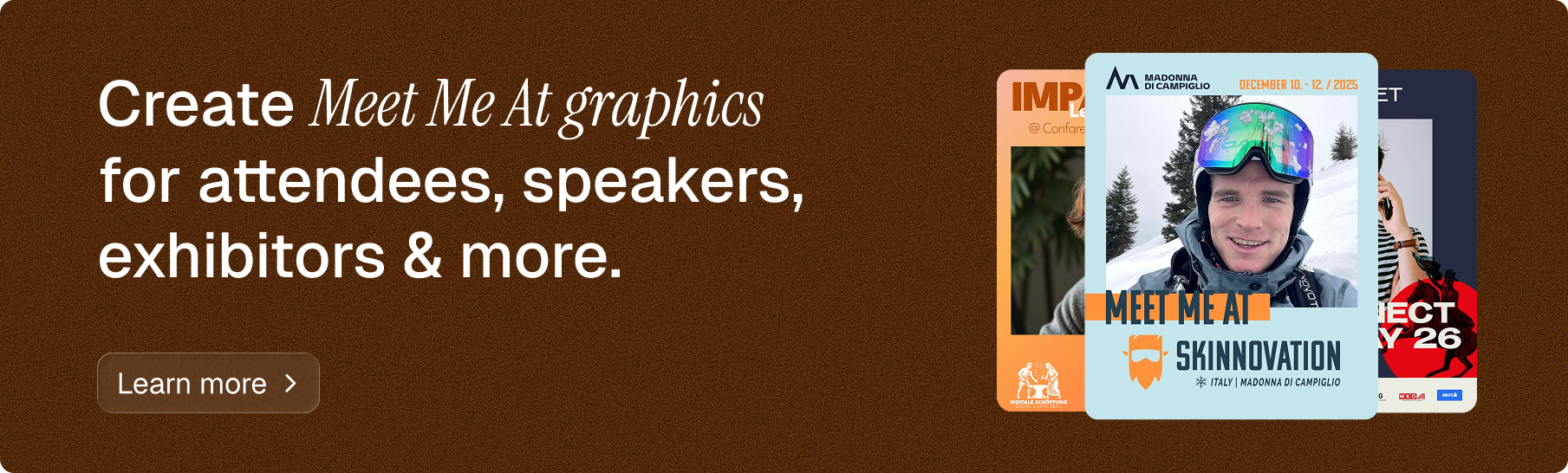
Individual attendee posts excel in linkedin event marketing because they leverage existing peer trust networks. When professionals post custom "I'm Attending" graphics, their immediate network takes notice. The social proof is immediate and contextually relevant. Below is a comparative breakdown of how corporate event pages and individual attendee posts perform across core acquisition metrics.
The Enormous Reach Impact of Attendee Graphics
To understand the true scale of individual posts in linkedin event marketing, look closely at the network effect mathematics. Suppose your official corporate account has 10,000 followers. An unpromoted update from your company page might achieve a modest organic impression count due to standard feed throttling.
Now, consider what happens when 200 registered attendees share a personalized image announcing their attendance. If each attendee maintains an average professional network of 1,000 connections, your event message is exposed to 200,000 potential registrants across dozens of distinct niche sub-industries. That extended network consists of targeted professionals whom your corporate account could never reach organically.
Social advocacy creates a compound distribution model. Each new registrant who shares a customized attendee badge acts as a brand ambassador, continuously introducing your conference to fresh, highly relevant professional circles.
This approach solves one of the biggest friction points in B2B event distribution: audience saturation. When you run paid ads, you repeatedly hit the same demographic parameters. When your attendees post, the message naturally spreads into secondary networks, industry verticals, and niche job titles that paid targeting parameters often miss.
Why Event Marketers Must Empower Attendees to Share
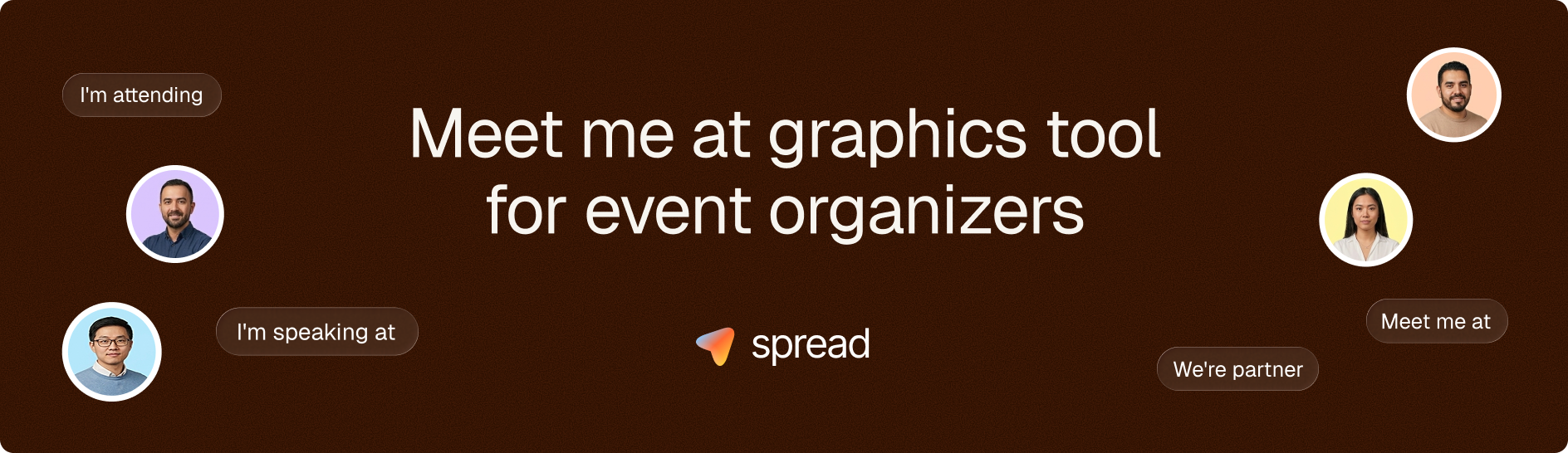
Most participants actually want to share their attendance on professional channels. Posting about attending major industry summits builds their personal brand, signals professional development to their employers, and lets their network know where they can meet up. However, friction stops most people from doing it.
If you ask an attendee to create their own graphic, open a image editor, match your brand guidelines, and write a post from scratch, 99% of them will simply skip it. They do not have the time or design tools to produce a polished asset. To turn ticket holders into active promoters as part of your overall event attendee engagement ideas, you must remove every single technical barrier.
Your promotional strategy should focus on providing an effortless share experience:
Generate customized graphics automatically using the attendee's profile details or uploaded headshot
Provide pre-formatted copy options that users can customize with a single click
Deliver the sharing option immediately after ticket checkout when user excitement is at its highest peak
Include clear event dates, location details, and registration links directly on the generated graphic image
When you provide branded assets through streamlined tools like Go Spread, you transform passive registrants into an active promotional network. Attendees get a clean, professionally designed graphic that highlights their industry participation, and your conference secures organic visibility across hundreds of personal feeds.
How to Combine Both Tactics for Maximum B2B Ticket Sales
The most successful B2B conference campaigns do not force a choice between event pages and attendee posts. Instead, they structure a unified workflow where each channel reinforces the other inside their broader linkedin event marketing playbook.
Start by setting up your native LinkedIn Event page as the administrative anchor. Put all essential logistical details, session outlines, and registration links there. Use this page to host live speaker Q&As before the main conference and to maintain an ongoing community feed for confirmed guests.
Simultaneously, make attendee advocacy your primary engine for driving traffic to that anchor. When professionals register on your website, immediately present them with a personalized "I'm Attending" graphic ready for social sharing. As those individual posts flood professional feeds, they direct warm traffic back to your official registration landing page or native event hub. This closed-loop system pairs the trust and reach of word-of-mouth advocacy with the structural clarity of a central event page, yielding superior overall conversion rates for your B2B conference.